The Treaty of Versailles: Just or Unjust?
"In the place where, in the glorious year of 1871, the German Empire in all its glory had its origin, today German honor is being carried to its grave. Do not forget it! The German people will, with unceasing labor, press forward to reconquer the place among the nations to which it is entitled. Then will come vengeance for the shame of 1919.”
- German newspaper, Deutsche Zeitung
The Treaty of Versailles was an agreement that was discussed and negotiated for months, and finally signed in Paris, France in 1919 by the Allied Powers and the Germans. Originally, the treaty between the Allied Powers and Germany was to be based on the "Fourteen Points" President Wilson of America brought up, but the French representative Georges Clemenceau, who backed the general French views with one simple belief: that Germany should be brought down so it could no longer do any harm; and English representative David Lloyd George, who supported the British want of revenge in public, but privately thought that Germany shouldn't be treated with such harsh rules.
When the German representatives arrived in Paris, France, they had been expecting to sign the points President Wilson had made. However, they had instead been greeted with a much harsher treaty with no way out. If they backed, the Allied Powers would invade their land.
The treaty included the rules such as the military forces of Germany shall not exceed 100,000 men, and that they would pay and accept responsibility of all damage caused to the Allied Powers, to name a few. In the end, Germany had to pay a total of $33 billion. Out of the 440 clauses mentioned in the treaty, 414 of them dealt with the punishment of Germany.
While they complied to the demands, they swore vengeance, as written by a German newspaper, Deutsche Zeitung:
"In the place where, in the glorious year of 1871, the German Empire in all its glory had its origin, today German honor is being carried to its grave. Do not forget it! The German people will, with unceasing labor, press forward to reconquer the place among the nations to which it is entitled. Then will come vengeance for the shame of 1919.”
Was the Treaty of Versailles just or unjust? While some people might think that the treaty was just, and that the Germans inflicted much harsher rules upon Russia, others disagree. While the Allied Powers and other smaller nations might have wanted justice and compensation for the damage World War I caused, making Germany loose land, pay $33 billion, and become in debt by themselves was not the way to go. Germany and her people took full blame of the war.
The Allied Powers may have started the League of Nations (excluding America, Germany, and USSR), but the Europeans and French wanted what was best for themselves, and not for the world itself. This reflected in the 440 clauses mentioned in the Treaty of Versailles.
The Treaty of Versailles caused many Germans to loose their money and their jobs. The economy of Germany fell, making the life of a German harsh and cruel. The Germans became desperate and angry. Not only had they lost land, but had also lost their dignity and power. They wanted revenge.
Later, Adolf Hitler rose up to power, promising the disgraced and desperate Germans power and wealth. He used the treaty as a starting point, and told the Germans that he would restore national pride and world recognition.
In the eyes of outraged citizens in countries abroad, the Treaty of Versailles may have been fair. Instead, it was much too harsh, and the treaty, instead of solving problems as it had been intended, created more.
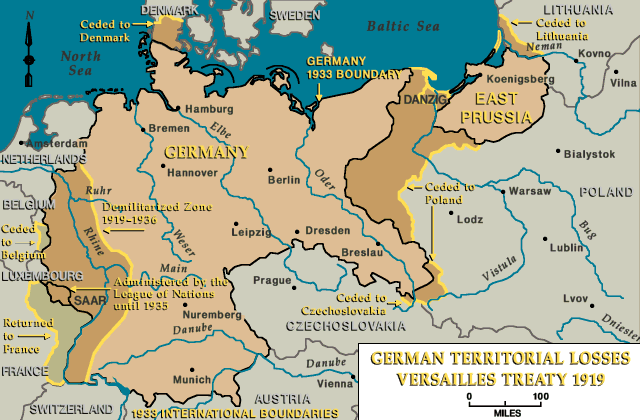 |
| Lost German Lands |