Pages

Friday, March 22, 2013

Making the Invisible, Visible: The First Step

Locked in, Tricked Out: Artworks for Freedom
"They paid some fines, but only one went to jail.  For me, it’s like a lifetime fine.”

Currently, there are at least 27,000,000 people being trafficked around the world. Within those numbers, only 1-2% of those victims are ever rescued. The ones who are not rescued are forced to labour, or are sexually exploited for the gains of those greedy for money. But what is human trafficking? Human trafficking is the definition of modern-day slavery: illegal, and an act that should be stopped. Human trafficking occurs worldwide, and there is no one country that is not affected by it. Those who are trafficked are often victims to physical violence, forced labour with no pay, and have no access to human rights that has been decreed under the Universal Declaration of Human Rights.

Human trafficking does not only impact those who are being trafficked, but to their families, those familiar to their victims, and to the public in general, even if we don't know it. I feel that the topic on human trafficking is an important issue to me because I am able to make an impact and prevent human trafficking, even if just a little, in a country where I live in such as Malaysia. Malaysia is a country in which many traffickers make as their destination for human trafficking. This not only brings down the reputation of Malaysia, but endangers the citizens of Malaysia as well. Traffickers target those living in poverty or those with middle-class educations. There are many citizens like that in Malaysia, and if we are able to bring light to the things that traffickers force their victims to do, we would be able to prevent human trafficking in Malaysia.

There were many surprising facts that I have encountered during the course of my research, such as the amount of those being trafficked (at least 27,000,00), and how hardly any of the traffickers are ever apprehended and brought to justice. While I had been aware that human trafficking occurred in the world, I had never imagined that it would be at such a large-scale, with so many people who aren't aware of this issue.  On the other hand, another thing that surprised me was that we can get rid of human trafficking in 25 years. However, that can only be accomplished if awareness is raised, and action is taken not only by organizations dedicated to helping the victims of human trafficking, but by the people around us as well.

Learning about human trafficking has increased my desire to bring awareness to this issue, and to help the victims of the traffickers. Additionally, it has made me realise how fortunate I am to live in such a sheltered environment, and to be aware of the dangers that exist out there in the world. Before we had started this research, the thought that human trafficking existed never occurred to me, along with other topics such as domestic workers. Though human trafficking is a grim and sensitive topic, I am glad that we are researching this topic because it helps me realise that not everyone in this world is as fortunate as I am, and that it takes more than a single group of people to stop human trafficking. If we are all able to work together to get rid of this problematic issue, then we can prevent anyone else from becoming victims of traffickers, and to save those being trafficked.


Monday, December 3, 2012

A Woman is Human, Just like any other Man


“I hate to hear you talk about all women as if they were fine ladies instead of rational creatures. None of us want to be in calm waters all our lives.”
― Jane Austen, Persuasion

Caring, nurturing, and delicate are just a few of the possible words that describe the common perceptions of women among society. It is necessary to have women to run a society smoothly, but despite that, many do not believe that women are equal to men, causing gender inequality. Gender inequality refers to the unequal treatment or perceptions of individual based on their gender. Out of near two billion of the world’s population living in poverty, 70 percent of those are women. [17] Only 28 women have been elected heads of state or government in this century. Women are simply disadvantaged in the educational, political, and economical functions of the world. This issue has been looked upon for many years, and many organizations are standing up and fighting for the right for women such as education and fair work.

Throughout the ages, women have continually fought for rights that should have been considered basic human needs, such as the right for education.“Two thirds of the 130 million children who do not attend school are girls.”[18] In many countries, it is illegal for the girl to be educated. Instead, they are required to stay home and learn how to do house-chores and other domestic work because of the belief that that is their role in society: to care for their families. This leads to be banning of education for girls in many underdeveloped countries such as Pakistan. Worldwide today, a significant number woman's future are in strain because they don’t get an education. “Of the world’s near one billion illiterate population, two-thirds of them are women.”[18] Most jobs require the ability to read. In order to apply for a job, one must fill out a job application in order to apply for a job. But if a woman doesn’t know how to read, she cannot apply for a job. Without education, a woman/girl’s future is extremely limited. And to the percentage of women who do receive education, there are still 70 percent of 2 billion people living in poverty after education, because gender inequality does not only exist out of school. Gender inequality continues on after education, and into areas such as jobs.


Since the 1980s, there have been more women in higher educations, and often graduating with higher degrees than men.[5] However, in the current world, education does not equal success for women, especially in the job market. “Women are often steered towards “feminine jobs” such as nurses, teachers, and secretaries; males dominate jobs such as architects, engineers, and airplane pilots.”[10] The reason for this is because women have always been traditionally viewed as being caring and nurturing; therefore designated to such occupations. Jobs such as nurses and teachers in which requires one to care for others, fit into the criteria of the society’s views. More complex jobs such as architects and engineers are considered more suitable and appropriate for the ‘hard-working’ men. While skills required to become a nurse, teacher, or a similar job are culturally valued, a woman's role is considered not as important, and therefore, worth less.“A woman earns 80 cents to every man’s one dollar.” [5] According to the International Labour Organization, women receive lower wage than men, regardless of the economical development of the country. While wages do indeed differ depending on job, a man and a woman with the same job receive a different amount of income because of the belief that men were more useful than women. In short, occupations predominated by men continue to be economically valued and pay higher wages. Because of high gender discrimination in the workplace, women often face a “glass ceiling” in the course of their careers.
The Glass Ceiling is “the unseen, yet unbreachable barrier that keeps minorities and women from rising to the upper rungs of the corporate ladder, regardless of their qualifications or achievements.” Working women often face this at some point of their careers, because of the expectations brought upon them on society. This too, is another form of gender inequality spurred on by the general public.

There have been many stories concerning the issue on gender discrimination. A woman by the name of Shauna told a story on how she was refused from a job simply because she had gotten pregnant.“I interviewed at a local company...My interviewer said I'd hear within two weeks. A month went by, I figured I didn't get the job...decided to make a family with my husband...Three months later..."We'd like you to come in for one final interview....We hit some bumps in the road but now we're ready to hire for the position" and I blurted out, "But I've gotten pregnant since then!" ...He started to stumble over his words, and never came right out and said it, but I could hear he had no interest in talking to me any further.” [19] Refusing a woman simply because she is pregnant is a typical form of gender inequality. Many employers discriminate against pregnant women because they do not want someone who will most likely take time off to recover from giving birth, take care of a sick child, etc. It is because of this reason that many single-mothers live in poverty. 
And, not only are adult women discriminated, but girls in school too, are the victims of gender inequality.“...Declined to hear the appeal of a Texas high school cheerleader who was kicked off her squad for refusing to cheer for a basketball player accused of raping her weeks earlier.” [20] Hillaire, who had been the victim of this rape case, had been thrown off the team and denied justice that should’ve been rightly dealt because she had been a girl, a cheerleader. It is common belief that cheerleaders are simply there to decorate the sidelines and benefit the male players and fans. The simple impression that women are simply there to benefit men is what leads to gender inequality, and the belief that women are simply worth this than man, even though they are not.


Gender inequality has been a long-standing issue for many centuries. However, in the recent years, prominent organizations such as the United Nations (UN), UNICEF, UNESCO and many others, have been striving to promote gender equality. They do so through means such as education, passing legislations to illegalize issues such as domestic violence, and raising public awareness through events such as International Women’s Day.[13] Even so, gender inequality continues to persist in both developed and undeveloped countries. Vera Nazarian had once said, “A woman is human. She is not better, wiser, stronger, more intelligent, more creative, or more responsible than a man. Likewise, she is never less. Equality is a given. A woman is human.” A man is not necessarily smarter than a woman, and a woman is not necessarily smarter than a man. Neither man nor woman are created lesser or better. Yet if this is true, why does gender inequality still exist?


SOURCES:
01. http://www.unicef.org/gender/files/Overarching_2Pager_Web.pdf
02. http://www.unesco.org/new/en/social-and-human-sciences/themes/gender-equality/
03. http://ec.europa.eu/social/main.jsp?catId=370&langId=en&featuresId=120&furtherFeatures=yes
04. http://www.unrol.org/article.aspx?article_id=28
05. http://www.harvardindependent.com/2011/12/gender-inequality-in-the-workplace-education-does-not-equal-success-1201/
06. http://www.ippf.org/our-work/what-we-do/gender/what-gender-equality
08. http://www.nyu.edu/classes/jackson/causes.of.gender.inequality/
10. http://www.ilo.org/washington/areas/gender-equality-in-the-workplace/lang--en/index.htm
11. http://www.un.org/millenniumgoals/gender.shtml
12. The American People Census 2000: Gender Inequality at Work.
13. http://www.unicef.org/gender/index_25445.html
14. http://www.unicef.org/malaysia/media_5448.html
15. http://www.unicef.org/gender/gender_57854.html
16. http://www.un.org/millenniumgoals/gender.shtml
17. http://www.soroptimist.org/whitepapers/wp_womenpoverty.html
18. http://www.un.org/ecosocdev/geninfo/women/women96.htm
19. http://womensissues.about.com/u/ua/intheworkplace/WorkplaceDiscriminationStories.htm
20. http://womensissues.about.com/u/ua/intheworkplace/WorkplaceDiscriminationStories.htm

Sunday, October 28, 2012

Fighting for the Rights of the Disabled


Disabilities affect hundreds of thousands of people in the world in both developing and developed countries. 10%, or approximately 650 million people in the world out of 7 billion currently live with a disability.[3] People with disabilities are more often found in under-developed and developing countries, though many with disabilities reside in developed countries. Moreover, disabilities aren’t simply limited to physical disabilities. Many live with either mental, emotional, sensory and cognitive disabilities. Despite the amount of people who live with disabilities, on the whole, hardly any attempt to change their own lives and others for the better. However, there is one girl who is determined to make a change in other individual’s lives. After living her whole life with Cerebral Palsy, 2011 Peace Prize Winner Chaeli (Michaela) Mycroft dedicates her life to defending the rights of other disabled children by assisting them in acquiring equipment and physical therapy to enhance the quality of their life.[1]


Chaeli’s desire to become independent motivated her to help others with disabilities to gain their independence by acquiring equipment and physical therapy. When she was a baby, Chaeli was diagnosed with Cerebral Palsy - a group of disorders that involve the brain and nervous system functions, such as movement, learning, hearing, seeing, and thinking -, making her wheelchair bound for her entire life. She didn’t want to always rely on others to move from place to place. “At the age of nine, Chaeli decided that she wanted a motorized wheelchair to become a more independent person.” [1] In order to become independent, Chaeli needed to accumulate enough money to buy her desired wheelchair, which she achieved by selling homemade postcards, cookies and flowerpots. Succeeding in raising more than enough money in seven weeks for the motorized wheelchair with the help of her family and friends, inspired her. Being able to move around in her wheelchair without any help was something that she had yearned for, and after achieving that dream, she extended her ambition to helping others with disabilities. With the help of her older sister and three close friends, Chaeli had been able to set up an organization focused on helping disabled children, called the Chaeli Campaign.“...annually helps more than 3000 children with disabilities in South Africa.”[1] A group of 22 people help children with assistant devices, therapies, and emotional support. Chaeli helps obtain custom-made wheelchairs in different forms of therapy for children in isolated communities. She educates them and spends time with them, and makes sure that children with disabilities in South Africa are able to go to school.


Children with disabilities frequently struggle to fit in with society, and Chaeli aims to make sure that children with disabilities are still able to live a normal life. Often times, children with disabilities are shunned in society simply because they are different.“...defends the rights and acceptance of disabled children.” [4] Chaeli believes in the rights and equality for all people, no matter the colour, race, or disability they may have, and that disabled children are still able to live like any other. “...are able to go to school, take part in activities, and have fun.” [4] Chaeli had been born with Cerebral Palsy, causing her to look different from other children, so she knew how it felt like to be discriminated. Because of that, Chaeli strives to make sure that children with disabilities in South Africa are still able to live a normal life. Everyone has the same needs, but people with disabilities commonly face prejudice. It was found that most women or girls with disabilities were abused at home, and that both genders were less likely to find a job. Chaeli’s campaign for impaired children, also known as the Chaeli Campaign, aims to help children with disabilities to fit in with society, and be able to play and interact like other children.


While many with disabilities live under discriminatory practices against disabled people, Chaeli Mycroft aims to change this. Her ideas and determination have inspired many disabled children and brought hope into their lives. People in the communities of South Africa who once never had a chance to acquire necessary equipment or therapy, now have essential care. The event that had spurred her on into making a difference in the lives of disabled children, has made a huge impact on the world. Chaeli’s determination and persistence enabled her to change the life of so many fellow children in South Africa. By taking a step that many others had not been able to, Chaeli has been able to enhance the quality of her life not only for herself, but for many others, too.

Sources:

Tuesday, September 18, 2012

Where I'm From


I am from the roaring waves and soft grass,

From peaceful nights and noisy days,

The creaking of swings and the splashing of water,

From the chirping of birds and the buzzing of cicadas,

And hot summers and cold winters.


I am from medals and trophies of pools,

From the gallops and pounding of hooves,

From choir and orchestras,

And from the scent of wood in newly bought books.


I am from "told you so", "speak louder", and "one more minute!"

From "you can do better," and "hey, that's mine!"

I am from loud shouts to soft whispers.


I am from bubble teas and milkshakes,

From barbeque to gumbo, 

Donuts and baguettes,

And from sneaking bits of chocolate,

In the middle of the night.


I am from the old family album,

that lives in my attic.

From the dusty picture frames,

that sits upon the walls.

I am from old and new scrapbooks,

and the things that go bump in the night.


Sunday, February 19, 2012

Propaganda

"Behind the Enemy Powers: The Jews"

Propaganda is misleading or biased information used to promote a political cause or view to the general public. The poster shown above is an example of propaganda, created in 1940 by Hamil for all of Germany to view, warning them about how Jews were the cause of their demise and suffering: "Hinter den Feindmãchten: der Jude" Behind the Enemy Powers: the Jews.

In this image, there are three flags: the British, American, and Soviet flags, with a man standing behind them with a Star of David on a chain along his chest. The stereotyped Jew (large, rich-looking) is standing as a large figure behind the three flags. The Jew's expression is intimidating, as if he was planning something, and does not maintain eye contact with the viewers.


The creator of the poster, Hamil, was trying to give off the feeling of conspiracy. The Jew, dressed in a black suit, hat and drawn as a rather fat man, gives off the impression as a wealthy entrepreneur. The Jew while standing behind the British, American, and Soviet flags with his left eye at the corner of his eye, makes it look as if the Jew is planning something. At the same time, this caricature shows a Jew not only planning something, but manipulating world affairs. This makes the viewers assume that the Jews works behind the scene to control the Allied Powers to go against Germany.

This image of a Jew standing behind the Allied Power flags, could have possibly caused the Germans to become wary of their Jewish neighbor, and soon, distrust them.The way the Jew had been portrayed in the poster was what most Germans already thought of them after so many other propagandas: Rich and evil. Placing the Jew behind the Allied Powers, the cause of Germany's demise, furthered the Germans’ anger and belief that the Jews were the main cause of why they lost World War I. As a result, men and women would have kept their family away from Jews, and influence children from young ages to harbour a distrust for Jews.


This image of the poster utilizes both lies and misleading messages to create a negative impact on the impression on Jews. Utilizing the German's kindled fear for Jews and the hatred for the Allied Powers, along with the belief that Jews were the cause of the fall of the Germans' Fatherland, this poster effectively uses the belief an emotions already there and furthers it by hinting that the Jews were conspiring with the Allied Powers.


Wednesday, February 8, 2012

The Boy in the Striped Pyjamas

"Stand up for what you believe in, even if it means standing alone."
- Unknown


The Boy in the Striped Pyjamas by John Boyne is about two boys, Bruno and Shmuel; one who is Jew, while the other is German. They lived in the time of the holocaust, which prevented them from leading normal friendship, but they are able to become friends despite all the differences. However, even though the story is a tale about two innocent, young, and naive boys, it touched another topic outside of the two boys' lives. What especially stood out in his tale was how no one ever stood up against what was happening. Even though the adults knew what was happening, none of them ever stood up for what they thought was right.


The main reason why no one ever stood up against the Nazis for the Jews was because they were afraid. They were afraid to go against Hitler's orders, and those who supported him strongly, because they knew that if they stood up, they could just as easily be labeled a traitor, and be thrown into concentration camps like the Jews, or get killed. And while they were treating Jews with injustice, Hitler had given the citizens of Germany hope, telling them that the start of all trouble lied with the Jews, that they were the fault of everything that had happened to them after the Treaty of Versailles.

When should an individual take a stand against what he/she believes to be an injustice? I believe that there is no right time, and all that matters is that you have the courage to take a stand for what you believe in. If you don't take a stand against what you believe to be an injustice, nothing will ever change, if not get worse. In The Boy in Striped Pyjamas the movie, the mother found out from Lieutenant Kotler that they were putting Jews in gas chambers, then after their death, they cart them out to cremate the bodies. While she was horrified and disgusted by what she found out, she did absolutely nothing to try to stop it. The mother had ignored it, and tried to live her life as if nothing had happened. While she believed that the Jews were being treated with injustice, she did not take a stand against authority, and try to right a wrong.

Questioning or challenging the social order can be both a good thing or a bad thing. While you may be the only one with enough courage to question what the authority is doing, it could be enough to start a movement, and bring justice to what or who had been treated badly. However, the consequences weigh heavily, as you could be labeled traitor, or alienated by society because of what you said or what you believed in, like how the Jews were isolated from public because of their religion.


Take a Stand

Wednesday, February 1, 2012

Treaty of Versailles

The Treaty of Versailles: Just or Unjust?

"In the place where, in the glorious year of 1871, the German Empire in all its glory had its origin, today German honor is being carried to its grave. Do not forget it! The German people will, with unceasing labor, press forward to reconquer the place among the nations to which it is entitled. Then will come vengeance for the shame of 1919.”
- German newspaper, Deutsche Zeitung


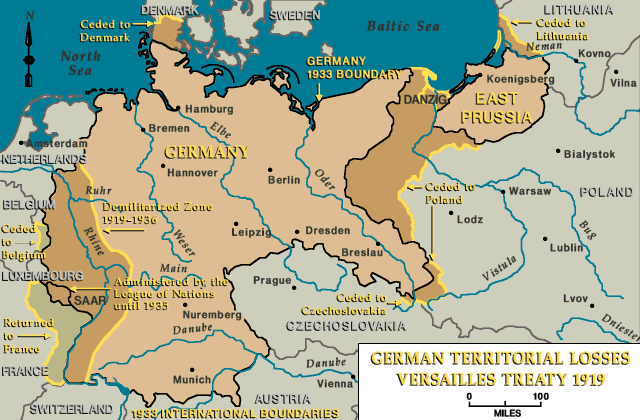
The Treaty of Versailles was an agreement that was discussed and negotiated for months, and finally signed in Paris, France in 1919 by the Allied Powers and the Germans. Originally, the treaty between the Allied Powers and Germany was to be based on the "Fourteen Points" President Wilson of America brought up, but the French representative Georges Clemenceau, who backed the general French views with one simple belief: that Germany should be brought down so it could no longer do any harm; and English representative David Lloyd George, who supported the British want of revenge in public, but privately thought that Germany shouldn't be treated with such harsh rules.

When the German representatives arrived in Paris, France, they had been expecting to sign the points President Wilson had made. However, they had instead been greeted with a much harsher treaty with no way out. If they backed, the Allied Powers would invade their land.

The treaty included the rules such as the military forces of Germany shall not exceed 100,000 men, and that they would pay and accept responsibility of all damage caused to the Allied Powers, to name a few. In the end, Germany had to pay a total of $33 billion. Out of the 440 clauses mentioned in the treaty, 414 of them dealt with the punishment of Germany.

While they complied to the demands, they swore vengeance, as written by a German newspaper, Deutsche Zeitung:


"In the place where, in the glorious year of 1871, the German Empire in all its glory had its origin, today German honor is being carried to its grave. Do not forget it! The German people will, with unceasing labor, press forward to reconquer the place among the nations to which it is entitled. Then will come vengeance for the shame of 1919.”


Was the Treaty of Versailles just or unjust? While some people might think that the treaty was just, and that the Germans inflicted much harsher rules upon Russia, others disagree. While the Allied Powers and other smaller nations might have wanted justice and compensation for the damage World War I caused, making Germany loose land, pay $33 billion, and become in debt by themselves was not the way to go. Germany and her people took full blame of the war.


The Allied Powers may have started the League of Nations (excluding America, Germany, and USSR), but the Europeans and French wanted what was best for themselves, and not for the world itself. This reflected in the 440 clauses mentioned in the Treaty of Versailles.


The Treaty of Versailles caused many Germans to loose their money and their jobs. The economy of Germany fell, making the life of a German harsh and cruel. The Germans became desperate and angry. Not only had they lost land, but had also lost their dignity and power. They wanted revenge.


Later, Adolf Hitler rose up to power, promising the disgraced and desperate Germans power and wealth. He used the treaty as a starting point, and told the Germans that he would restore national pride and world recognition.


In the eyes of outraged citizens in countries abroad, the Treaty of Versailles may have been fair. Instead, it was much too harsh, and the treaty, instead of solving problems as it had been intended, created more.


Lost German Lands

Thursday, January 26, 2012

No Man Is An Island


"No man is an island entire of itself; every man
is a piece of the continent, a part of the main;
if a clod be washed away by the sea, Europe
is the less, as well as if a promontory were, as
well as any manner of thy friends or of thine
own were; any man's death diminishes me,
because I am involved in mankind.
And therefore never send to know for whom
the bell tolls; it tolls for thee."

These words by John Donne from the 1624 Meditation 17, from Devotions Upon Emergent Occasions 


How do these texts explore similar themes?


The three texts, Meditation 17 by John Donne, The Island by Armin Greder, and the other, Mankind Is No Island, by Jason van Gederen, all explore the theme of connection and isolation between people. No one can live on earth without affecting another as told by John Donne and shown by van Gederen, and is shown in The Island by Greder. A stranger appeared on an island, and at first, the villagers took him in, but because of his strangeness, he was isolated away from the villagers, put in a goat pen. But fear slowly grew upon them until, finally, they pushed him back out into the sea. Although the stranger had done absolutely nothing, he affected the villagers in a huge way. In the visual text by van Gederen, it's shown that the homeless are ignored by others because they lived on the streets, and looked ragged. The fortunate people walk past them, and it's like looking at a whole other world, where the poor are isolated from the fortunate, and while it doesn't seem like they affect them, the poor people do because it is a reflection on the people who were lucky.


How do the texts provide insights into prejudice and "otherness"?

The texts provides insights into prejudice and "otherness", especially in The Island, where Greder shows the isolation of one stranger/foreigner, and how since he had arrived different, the villagers had not wanted him on his island nor had they wanted to take him in because judged him before they actually came to knew him. It is also shown in Mankind Is No Island, when we ignore the homeless on the streets because they are poor, and we don't know them. People judge others before they get to actually know them because they are different, they aren't like them.


Why do people make distinctions between "us" and "them"?

I think that people make distinctions between "us" and "them" because they are afraid of what is different and what they do not know or understand. If they meet another person who looks/acts different, they become scared because the person could be dangerous. Another reason is that people make distinctions between "us" and "them" is because they are afraid of people being more powerful, and that if they make an "us", they might be able to overcome the "them".


Thursday, January 19, 2012

Nature at Work

Over winter break, Mr. Peavy gave the class a long-term project, which was for us to get out, experience, and record Nature. I decided to do Task B, which was to choose 5 tasks from this site.

Task 1: Start a rock collection


In New Zealand, I collected rocks from various places, which includes sedimentary rocks such as shales and sandstone, and river pebbles.


Task 2: Scientific name of a plant


Task 3: Find a streetlight or backyard light and watch for insects who flutter into it


When I saw outside in the night near a streetlight, I noticed that there was a bunch of insects flying around it. Now, this wasn't new, but I never understood why they flew around the light. So, I searched up why.

A favored hypothesis is that the insect's brains are programmed to keep a bright light at a certain angle on its eye. Before humans came along and invented artificial light, the only way to fly by was the moon. And since the moon is 280,000 miles away, the insects were able to fly in a relatively straight line. The system of travel for insects doesn't work nowadays because the artificial lights (streetlights, lamps, light-bulbs, etc) shine in all direction (or a full circle), so the insects end up traveling in an endless circle around the light.

Task 4: Learn to Identify Poison Ivy


Poison ivies have three divided leaves, its center leaf is on a longer stalk, and there is white berries along the stem. Sometimes, it appears as a low, upright shrub, while other times, it is a vine that can climb up to sixty feet high.
Poison ivies usually reside in flood plains and upland forests, along roads, railroads, streams and fences.

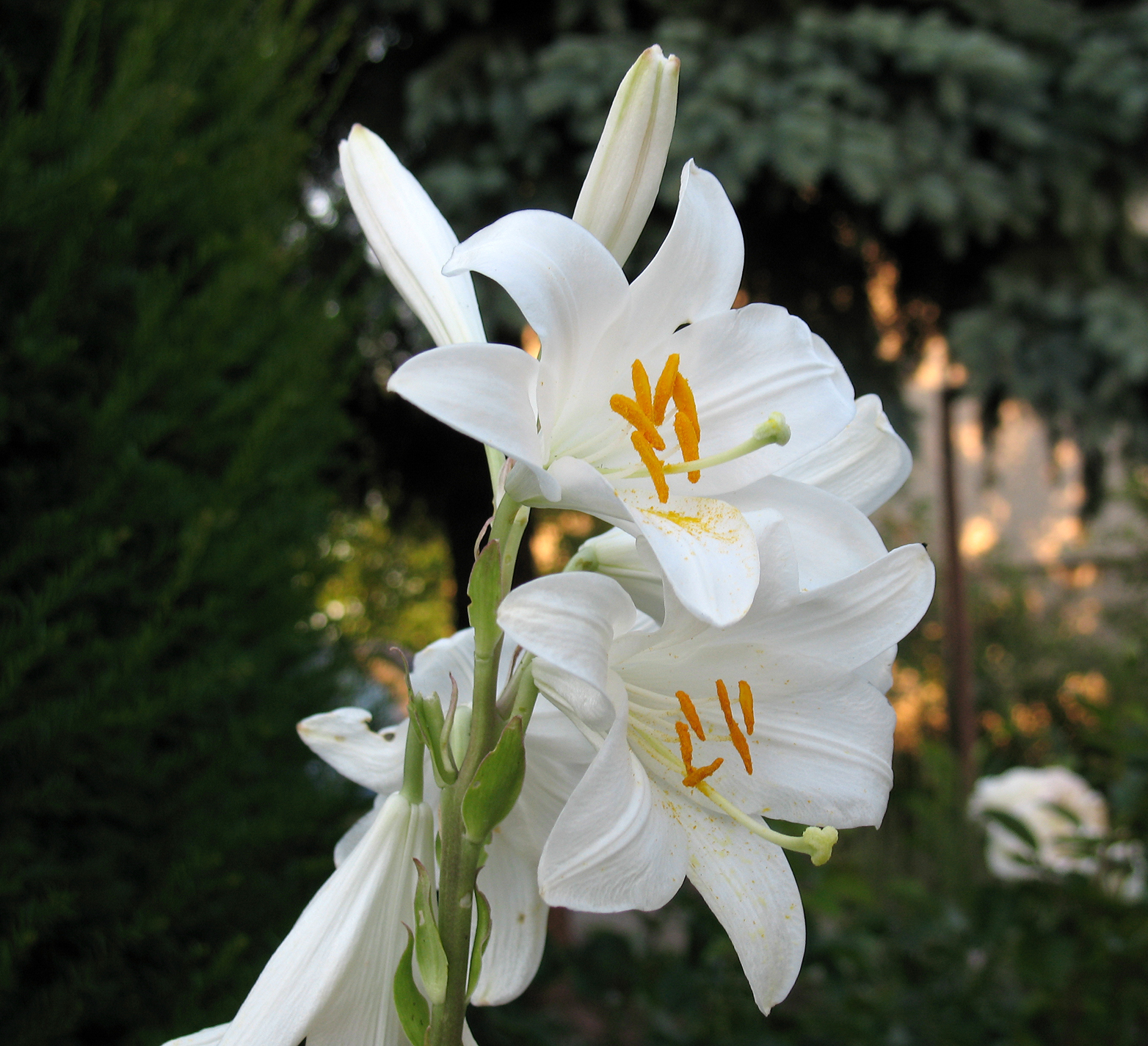
Task 5: Blossom Arrangement


Foxgloves: The foxglove flower is a corymb because its flowers come out directly from the stem.


Coriander: Coriander flowers have an umbel arrangement, which means that it's flowers come out from the top of the stem into tiny different ones.

Sunday, November 20, 2011

Profile JJ


Last year, Mr. Whiting came into the classroom to help us learn our learning profiles. Then, it was Profile JJ. Now, it is still Profile JJ. To figure out my learning profile and confirm whether or not it has changed, we tested our eyes, hands, ears, and feet to determine what our learning profile would be. Even a switch of whether you use your left or right ear can be a big difference. This year, both of my hands reached out to catch whatever was falling, so after thinking a while upon the situation, we decided that my right hand would be dominant.


I think I learn best when there's nothing to distract me from what I'm doing. I sometimes spend hours on my homework when it should only take me from 15-30 minutes. Being alone in the room would also benefit me, because when certain people come into the same room as me, I randomly remember something else I have to do, and whatever I was doing originally gets left alone. On the paper I received, it says that sitting on the right side several rows back will help me learn better because there, I can hear easily.


The strategies that would help me learn better is learning how to prioritize. If I could learn how to do that, my school life and home life would be easier. Another strategy is for me to analyze decisions and go through logical reasoning processes. That might be a challenge for me-I'm the kind of person who doesn't think through everything before doing it. And time management, definitely need to work on that. I do other stuff when I'm only supposed to be concentrating on my homework, so it takes longer.


I would like my teachers to know that I don't like thinking logically, and I don't like it when we have to order/number things. I find it useless and boring to do. I like to write or doodle during class if I have a paper in front of me. If the teacher talks for more than five minutes at a time, I tend to zone out and not pay attention to what the teacher is teaching us. I also get distracted easily during class.

Sunday, November 6, 2011

Take A Stand


"He who lends a book is an idiot. He who returns the book is more of an idiot."
- Arabic Proverb


What are the importance of a library? It surely isn't that minor of an importance, but the UK government seems to disagree. Their idea of closing down libraries all around the country brought millions of people in a uproar. Indeed, the budget needed to keep the libraries from closing, and that yes, they do need to make cuts, but destroying the libraries simply isn't the answer. Governments have a duty to care for their citizens, and if they take away all access of knowledge, how is that care?


I believe that libraries are worth standing up for, for they offer people, regardless of race, age, or history, a place to learn, a place to simply read. Not everyone can afford to buy books, and now everyone can afford a computer. If we were to buy books for everything we needed, from learning to enjoyment, the cost would be great. But in libraries, they offer access to both books of all genres and computers with internet access to search up all things. In communities where people don't have computers, they can go to the library for research. 


Books not only supply information, but they make you think, they make you question things that you've never thought about. They take you to places you've never gone before - past, present, future. They open up portals to horror, wonderment, love, hatred, to dragons and knights, from eras past to the present. They are a way of free speech, to be able to talk about whatever they like. Books allow the readers to dream, to escape reality into any world they want. Does the government have the right to take this away? 


Once, Neil Gaiman said "A librarian is the thin red line between barbarism and civilization." Without the access to books, where would we be? Surely not living as educated people, for the gift of language is what made us what we are, and what has took us this far in life. Removing books are just as bad as book burning, for what are we without free speech?


Monday, September 12, 2011

My Five Special Objects

What describes me in five objects? A violin case, swimming trophy,  silver necklace, mermaid key-chain, and my bookshelf.


The violin case is one of the most important things that describe me. It’s one of those things that if you take it out of my past and current life, it’d leave lots of holes. I started learning the violin when I was five, and had several recitals, and orchestra performances during that time. Sometimes, I absolutely loathed to play the violin, and would have to force myself and play. It was frustrating to try to get every note in tune, and to play it flawlessly like my father or teacher might want me to. However, the violin is a way for me to relieve my stress. Some days, I’d pick up the violin, and just play to my heart’s content. I’d never notice the time pass by, and just keep on playing.


For me, my swimming trophies hold a lot of memories, starting from first grade summer to fifth grade summer. In those times piled up, a lot of memorable things happened. There were two swimming pools in the neighborhood, but often, we’d just use the pool called “Ellis Creek.” At the Ellis Creek Pool, there was a lake right behind with a river flowing towards another lake. My friends and I would always go to the river before play around before our practice or after.

One day, my friend, Kasey, and I went down to the creek. Every year, there would be some ducklings, with their mother to watch over them. And every year, we would be tempted to try and catch one. The year right before I moved to Malaysia, Kasey and I finally decided to try and touch one. Just seeing a duckling made me want to try and pet it. Let’s get this straight: it was tempting. The river water was clear and cold, and the sun was beating down on us. Even though stepping on the sharp, minuscule stones in the water would hurt, it beat standing on the sun-cooked concrete any day. Kasey and I quietly slipped into the water, approaching the ducks. Lucky for us, one of the ducklings went swimming away, back into the lake, and the momma duck chased after it. In that moment of time, Kasey and I ran towards the ducklings, making loud splashing noises. Not the smartest thing to do, but it worked for us. We managed to catch one, but the momma duck abandoned its chase for her duckling, and came flying towards us. I dropped the duckling on the water, while my friend was being pecked by the momma duck. I couldn’t stop laughing - it was honestly a ridiculous sight: a girl running around, screaming, with a duck flying behind her, pecking continuously. It’s one of those memories where I always smile when I think about it.

Of course, the trophies I got was later on, but in each trophy I’ve gotten each summer, they always contained special memories.

                                             
The silver necklace is one of those really important things to me. It’s one of those “best friends” necklace, broken in half a heart for two people. My friend, Megan, gave it to me. It’s important to me, because it marks our friendship. Admittedly, Megan and I weren’t friends at the beginning. She came around in second grade, and the first impression I got of her would be cocky. The way she acted, talked, walked just simply screamed “arrogant.” Most of my classmates agreed.
I was kind of reckless back in second grade-that was probably the year I got injured or something the most. I once bluntly told her, “You know, not many people in this class likes you.” Afterward, I felt horrible, but surprisingly, she didn’t mind. Megan simply shrugged and said, “I don’t really care.”
During recess one day, the boys and I were playing this game, and near the end of recess, I tripped and fell over a boy’s foot. He was one of my close friends, and he came and asked if I was alright. I told him to go ahead, and tell the guys that I went off to do something else-I was prideful back then, and was reluctant to say that I was winded from falling down. When the whistle blew, signalling the time to go in and eat lunch, everyone rushed past. Everyone but Megan. By then I was crying, because I couldn’t breathe, couldn’t stand up. She was the one that took me to the nurse, and not anyone else. After that, through a series of weeks, we became best friends. From second to fifth, we would always hang out, and even after I moved, she would still chat with me from time to time.


I have this mermaid key-chain that’s special to me. It’s made out of yarn, and the length’s about the length of my palm. I got it from my friend right before she left for California. However, a week or two before, we were fighting about something. I don’t remember what, but it seemed really trivial, unimportant. Fortunately, right before she left, we made up, which I’m really grateful for. As a reminder of her, she gave me the mermaid. It’s special to me because before our fight, we were the best of friends, and we also stuck together, like glue. After she moved, I never saw her again. We used to email, but slowly, we stopped, and pretty much lost contact. I hope I can see her again, but if I don’t, at least I have something to remind me of the time we spent together.


I know many people who dislike reading, because they think it’s boring, hard, or something like that. But I, on the other hand, absolutely love reading. For me, reading is a way for me to just have fun with the characters, and forget about reality. I love how authors can just spin some words into a wonderful tale of magic, love, or mystery. My bookshelf holds a variety of genres, and even some math books.
I don’t think there’s much history to the books I have for people to be interested in. But I can definitely say this: They’re worn out, and many of the bindings have broken at some point, which my father fixed it for me. I know some people think rereading books is a waste of time, but to me, I think it’s wonderful to travel to another world again.
The each and every book I have in my bookshelf are books that I’ll treasure forever.


Me in five objects: A violin case, a swimming trophy, a friendship necklace, mermaid key-chain and my bookshelf. All of those objects hold a million of tiny pieces of memories for me, and they're special to me.

What's in a Name?

"What's in a name? That which we call a rose,
By any other name would smell as sweet."

- Romeo & Juliet

Tiffany

Tiffany. It is a bold and elegant name, a name so unlike me. When heard, it paints a picture of a dark, stormy night, when lightning lights up the sky for all to see, glorious and daunting. Yet, it can always create an image of a ribbon flowing elegantly in the wind, dancing lightly. It means Manifestation of God - Divine Manifestation - yet I am neither religious nor special in any way. I’m just a girl on the street you walk past without giving a second thought. A name derived from the Ancient Greek Theophania, it is a name that does not represent me well. Yet, when people call my name, it sounds natural, it sounds like me.

When my name is written, I always thought it looked awkward, how the ‘i’ always looked crushed between the towering ‘T’ and ‘F.’ When someone whose mother language isn’t English says my name, they elongate the ‘I,’ which makes it sound like a ‘ee.’ When that happens, my name no longer sounds bold and elegant, but more like a beautiful note on a violin gone wrong.

When asked what color my name could be, I think of a dark, navy blue color tinged with silver is the color I imagine with my name. It is dark and mysterious, and is not easily spotted in a mass of colors, and mysterious like the gods. Though it may not seem so, the colors represent both my name and me. 

My name doesn’t have much of a history. My parents had simply picked up a name book, and chose between Stephanie, Sabrina, and Tiffany. But out of all those, my father chose Tiffany because of the jewelry Tiffany & Co. “I chose it because it was elegant and beautiful,” he had said. I used to wish I had another name, but when I think of the other names I could have gotten, like Sabrina or Stephanie, I am grateful that I had been chosen the name Tiffany. 
Though I may not be elegant nor bold, beautiful or special, I am still me, and no other name would fit me as perfectly as Tiffany.

Thursday, August 11, 2011

Imperfection is Beauty

"Imperfection is beauty, madness is genius and it's better to be absolutely ridiculous than absolutely boring."
— Marilyn Monroe


The reason why I chose this quote is because everyone's imperfect. In the world, there is no such thing as "perfection." To me, the quote is saying "Be yourself, and don't let anyone else get you down." It might not be the meaning, but I have the feeling that the quote is implying that.

Another reason why I chose this quote was because it was probably one of the few quotes that made me smile. Perhaps it was the part where it said, "it's better to be absolutely ridiculous than absolutely boring." Or maybe "madness is genius." Or even "Imperfection is beauty." But I guess to me, it was one of those quotes where it just tells you "to live your life how you want." You don't have to be beautiful to be perfect, a genius to get good grades, or act the same as everyone else to get in the crowd. Life is about living as yourself, and doing what you believe in.

Just because we're different, doesn't mean we imperfect! After all, we are made out of imperfection.

Thursday, May 26, 2011

Infallible (Greek Movie Trailer)

Infallible:


In humanities, we were supposed to make a movie trailer on a myth. We could choose from Egyptian, Greek, Chinese, or Aboriginal. So, I decided to do a Greek Myth on the battle between the Gods and Titans. The story originally started out with Cronus eating his sons and daughters. Rhea, his wife, managed to hide one baby before Cronus could swallow him up-like he did with the other children. The baby was Zeus.

When Zeus got older, he returned to Olympus as Cronus' cupholder, and slipped in a drink that would make his father vomit up his other children.

Zeus' siblings, grateful, made him their leader. They declared war, and it became the battle between the Titans and Gods.

Infallible: I chose the name Infallible because it meant incapable of error. Since it was a war between the Titans and Gods, one single mistake might've plunged them to doom.


Hope you enjoy!


Greek Graphic Sources

Sunday, May 22, 2011

♫ The End ♫

From August 3rd to June 3rd: The whole school year has been filled with fun, friends, and most of all, work.
Sounds kind of depressing, doesn't it? Work. But so many things happened this year, so it evened out. MS Parties, Spirit Week, Malaysia Week, Bake Sales...to name every single detail of this year would take a while! 


The piece of work that I was most proud of this year was my Ancient Egyptian diary entries. These three diary entries are perhaps the ones I worked hardest on this year, and showcases my best writing. Writing is my passion, and that's why I worked the hardest on the AE diary entries this year. 


The greatest challenge for me this year was probably our first literature circle, when we had to read Call it Courage. Mr. Thomas explained the whole thing to us, but I didn't quite get the whole thing. The connection and vocabulary were easy enough, but the passage and question just plain confused me. So that was my reason for why I thought my very first literature circle was hard.


I think I learnt a lot about myself this year. I think that I could work a lot faster, definitely. And the most is that I get distracted easily. I mean, no matter where I am, I get distracted. Empty room, I find out a way to procrastinate. A noisy room, I space out. A quiet room, I just get distracted. Sure, I'll say that I'm doing my homework, and that it just takes a while, but honestly? I just can't concentrate. I somehow always manage to convince myself that I always have more time; not the best thing. If I try to work on one thing for too long a time, I'd just walk away, and not finish it till the last minute.


a) Behavior: 
Well, personally, I think it's satisfactory. I mean, sometimes I goof off, and sometimes I work. I guess it depends on the day, or my mood, or what we're doing. If I'm bored, I do tend to space-out.

b) Participation: 
Satisfactory, I think. Well, I personally don't like participating in discussions, but I think that I do sometimes. I do think that I need to participate more in discussions, however.

c) Organization: 
I like to think that I'm organized, and that I know where everything is. But sometimes at home, I loose stuff, and I freak, and freak, and freak until I find whatever I was looking for. So, I'd rate myself a 'satisfactory.'

d) Effort:
Personally, I like to think that I always went 'above and beyond what was required' this year. I worked extremely hard on all my projects/homework, and tried my best on everything. 


There are two goals I want to make in grade 7 next year: To work more efficiently, and to participate more in class.

Goal 1: I want to work more efficiently because it would save me so much more time, and leave me free time to do the stuff I want, and not just spend my whole after-school life doing homework. So I just need to think, "If you don't do this now, you'll get a B or below.' That somehow helps...most of the time.

Goal 2: I think that this isn't just a want, it's a need. I need to participate more in class. Participating in class helps me learn better, because when I'm not talking, I'm spacing out.  So sometimes I have no idea what's going on.


Well, if there's something I would like the teachers to know, it would be the fact that I absolutely love writing. But there's one particular genre I like to write: It's not essays, or narratives, but it's imaginative writing. Paranormal, fantasy...I can write those kind of stuff in a matter of minutes, with just one single word as an inspiration. But if you tell me to do an outline to go along, I'll write down the story then do an outline. If making an outline is part of an assignment? I'll probably start on it, but not finish it until I finish the story. Well, the main thing is, I absolutely hate planning my stories. They never seem to work out that way.
Another small thing is that I don't have a particular liking for working with partners, unless it's literature circle, where I can learn something from working with a partner. 


Which activity did I like the most in Humanities? It would be the Tic-Tac-Toe. It definitely helped me study about whatever historical era we were doing, and it's a fun way of learning about Ancient China, or India, or Egypt. I also liked how we could choose the projects we wanted to do, so that it would best match our group's skill. That definitely helped.


I honestly wished that we could've spent more time on our Imaginative narratives. To me, one is too little, and having a word count doesn't exactly help, either. If you really want to write, you should be able to write as much as you want, as many times as you want. When we were doing the project, I could see that a lot of people enjoyed it, shared ideas and all.


A word of wisdom? From me?
Take you time, do your best, and mots of all, enjoy! Don't let your first year of middle school go to waste. Instead, have fun!


Advice?
Do your homework the minute you get it. Finish it at lunch, on the bus, during break, whatever. Makes like much easier ;)


Welcome to the end of 6th grade.

Tiffany